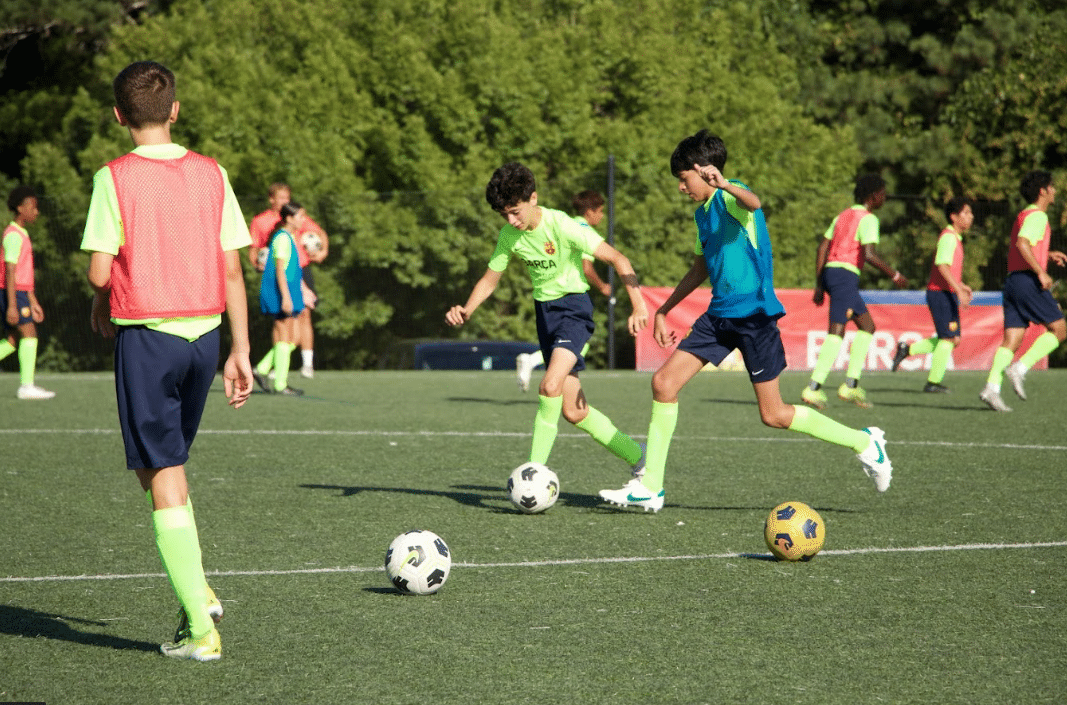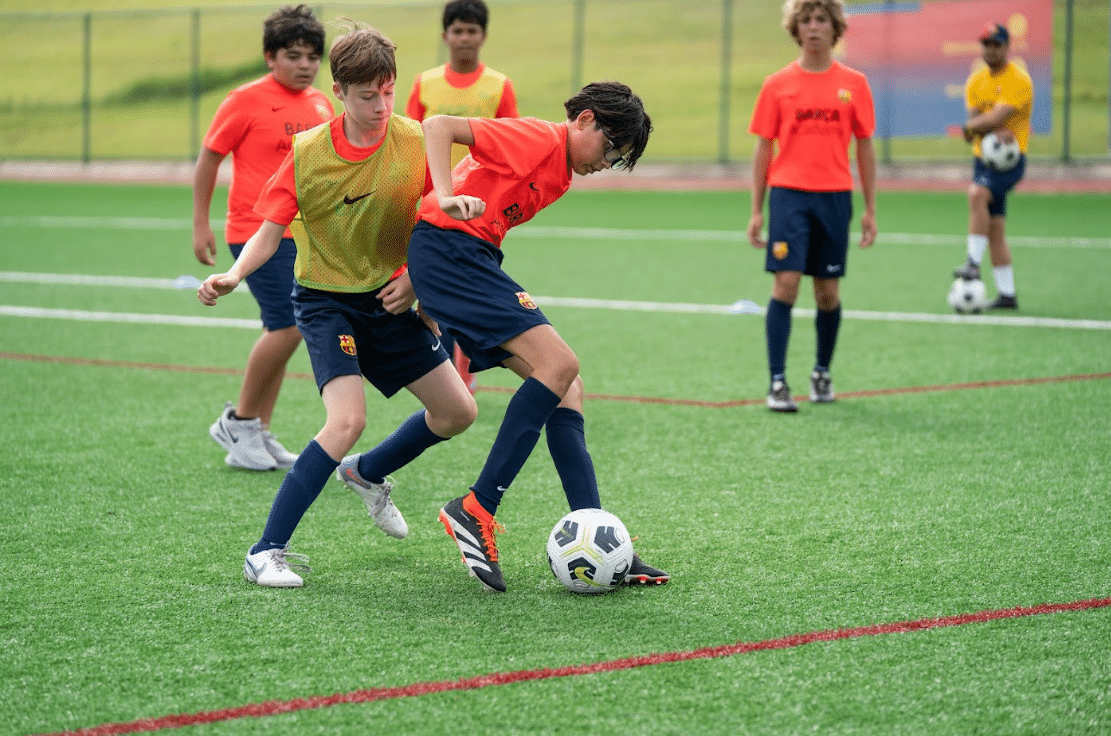

Barça soccer drills are the technical and tactical exercises developed at FC Barcelona’s La Masia academy — built around rondos, quick one-and-two-touch passing, small-sided games, and 1v1 moves — adapted here for kids to practice both at home and on the field. These drills prioritize ball control and decision-making over raw athleticism, which is why they work for players as young as 6 and scale up through the teenage years.
Key Points
- Barça soccer drills center on the rondo (piggy-in-the-middle possession game), first-touch control, and small-sided games rather than isolated fitness work.
- Kids as young as U6-U8 can start with simple cone dribbling and wall-pass drills using nothing but a ball, four cones, and a wall.
- Small-sided games (3v3, 4v4) are backed by sports science as the most effective format for developing decision-making in young players.
- A realistic home session for a child is 20-30 minutes, 3-4 times a week, and doesn’t require a full-size goal or field.
- Barça Academy US camps and academies structure these same drills into progressive, age-based curricula for players who want structured coaching.
- Warm-up, hydration, and rest matter as much as the drills themselves — youth training guidelines recommend balancing skill work with recovery.
What Are Barça Soccer Drills?
Barça soccer drills are training exercises rooted in FC Barcelona’s La Masia methodology, a system built by coaches influenced by Johan Cruyff’s positional-play philosophy and refined over decades of youth development at the club. The core idea is simple: technical mastery of the ball comes before tactics, and tactics come before physical intensity. A child who can receive, control, and release the ball under pressure will always have more options on the field than one who is simply fast or strong.
This philosophy shows up in three pillars that repeat across nearly every Barça-style session:
- Possession under pressure (rondos and tight-space passing)
- First touch and ball control (receiving the ball to immediately play forward)
- Game intelligence (small-sided games that force quick decisions)
Unlike drills built around cones and ladders alone, Barça soccer drills almost always involve a ball and at least one other player, because decision-making can’t be trained in isolation. This is also why these exercises translate well to a backyard, a driveway, or a small patch of grass — they don’t require a full pitch, just space to move and a partner or two.
The Rondo: FC Barcelona’s Signature Drill
The rondo is a possession game where a small group of players in the middle try to win the ball from players positioned around them in a circle or grid. It is the single most recognizable Barça soccer drill and the daily warm-up at every level of the club, from the first team to the youngest academy groups.
A basic rondo for kids works like this:
- Set-up: 4-6 players form a circle roughly 10-15 feet across; 1-2 players stand in the middle.
- Rules: Outside players pass the ball around, limited to one or two touches; middle players try to intercept or block a pass.
- Progression: Start with no touch limit for younger kids, then introduce a two-touch, then one-touch rule as control improves.
- Coaching cue: Encourage players to check their shoulder before receiving the ball — this single habit, repeated hundreds of times, is what separates comfortable ball players from nervous ones.
The rondo teaches first touch, spatial awareness, and quick decision-making simultaneously, which is why it remains central to Barça’s methodology at every age group rather than being phased out as players get older.
Barça Soccer Drills by Age Group
Not every drill suits every age. A 6-year-old and a 13-year-old need very different demands on working memory, coordination, and attention span, even when the underlying drill (like the rondo) stays conceptually the same.
| Age Group | Focus | Sample Drill | Session Length |
|---|---|---|---|
| U6-U8 | Ball familiarity, basic control | Cone dribbling, 1v1 “keep it away” | 15-20 min |
| U9-U10 | First touch, simple passing patterns | 3v1 rondo, wall passes | 20-25 min |
| U11-U12 | Positional rondo, small-sided games | 4v2 rondo, 4v4 to small goals | 25-35 min |
| U13+ | Tactical rondo, 1v1 moves under pressure | Positional rondo (tiki-taka style), 1v1 to end zone | 35-45 min |
For the youngest players, the goal is simply touches on the ball — hundreds of them per session, in short bursts, with lots of variety to hold attention. As kids move into U11-U12, drills start to include a defined shape (triangles, diamonds) so players learn to create passing lanes rather than chase the ball in a pack, which is one of the most common issues youth coaches see at this age. By U13 and up, sessions can add tactical constraints — for example, requiring a one-touch finish or limiting the number of consecutive touches by one player — that mirror how Barça’s own academy groups train.
Home Drills vs. Field Drills
Home drills for Barça soccer training focus on individual technique that doesn’t require a partner or a full field, while field drills need more space and at least one other player to simulate game pressure.
At home, a driveway, garage wall, or small backyard is enough for:
- Wall passes — striking the ball against a wall and controlling the rebound with the first touch, alternating feet.
- Cone dribbling — weaving through 4-6 cones using both the inside and outside of the foot (the classic “La Croqueta” touch that shifts the ball from one foot to the other under a defender is worth isolating here).
- Juggling — keeping the ball off the ground with feet, thighs, and chest to build touch and confidence.
- Wall rebounds for first touch — receiving a bounced pass and killing it dead in one touch before the next repetition.
On the field, with even one friend or sibling, drills expand to:
- 1v1 duels to a small goal or cone gate, practicing moves like the Cruyff turn or a simple step-over.
- 3v1 or 4v2 rondos, which need enough players to create real passing angles.
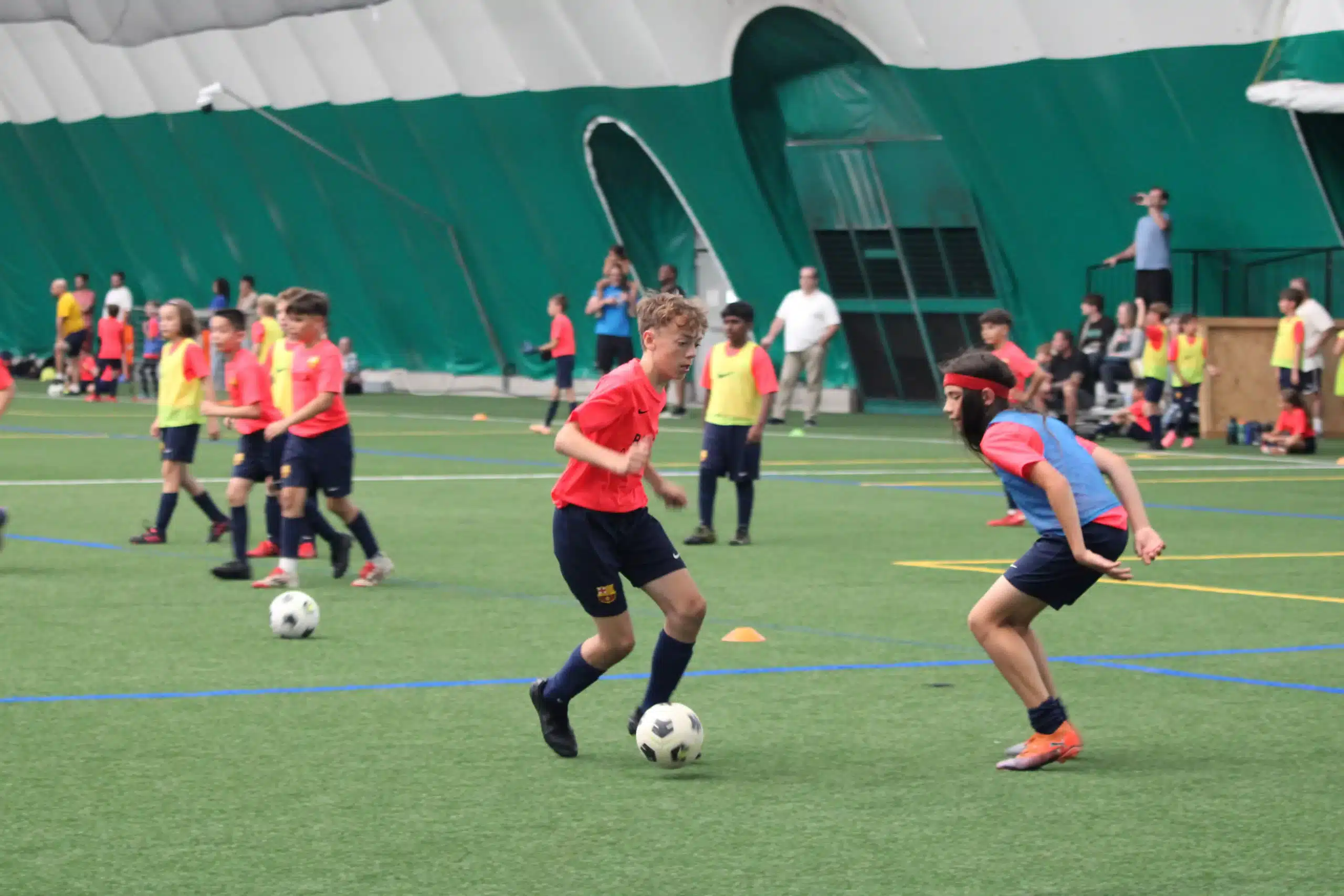
- Small-sided games (3v3 or 4v4), which research consistently shows produce more touches per player and more decision-making repetitions than traditional 11v11 formats for young players.
A practical rule: if a drill can be done productively against a wall or alone with a ball, it’s a home drill; if it depends on reading another player’s movement, save it for the field.
A Sample Weekly Training Plan
A realistic plan for a child playing club or recreational soccer typically blends 2-3 short home sessions with 1-2 field sessions:
- Monday (home, 20 min): Cone dribbling + wall passes + 10 minutes of juggling practice.
- Wednesday (field, 30 min, with a friend or parent): 3v1 rondo + 1v1 duels to a cone gate.
- Friday (home, 15-20 min): Ball mastery moves (La Croqueta, step-overs) + wall rebounds for first touch.
- Weekend (field, 30-40 min, small group): 4v4 small-sided game + a positional rondo warm-up.
This spacing avoids overtraining — a real risk for young athletes — while still building the repetition volume that technical improvement requires. Youth sports researchers generally recommend against single-sport specialization with excessive weekly hours at young ages, so this plan is intentionally light enough to sit alongside other activities.
Equipment You Actually Need
Barça-style training is deliberately low-tech. A realistic starter kit is:
- A properly sized ball (size 3 for U6-U8, size 4 for U9-U12, size 5 for U13+)
- 6-8 cones or cone markers
- A flat wall or rebounder
- Comfortable footwear suited to the surface — grass, turf, or a hard driveway each call for a different best soccer cleats for kids setup, and the wrong pair can slow a child down more than any drill can speed them up
Bibs or a second color of shirts are useful once small-sided games enter the mix, mainly so kids can visually track teammates versus opponents without stopping to ask.
Common Mistakes When Practicing Barça Soccer Drills
The most common mistake is skipping the rondo and going straight to shooting or fitness work, because possession games feel less exciting to set up than a shooting drill. But without the rondo’s repetition of first touch and quick passing, later tactical drills fall apart under pressure.
Other frequent issues:
- Overloading younger kids with adult-style tactics (formations, offside, zonal marking) before they’ve built basic ball comfort.
- Skipping the warm-up phase, which increases injury risk and gives players fewer quality touches once fatigue sets in.
- Ignoring both feet — Barça’s methodology treats two-footedness as non-negotiable, so drills should force the weaker foot deliberately rather than let kids default to their dominant side.
- Training in isolation for too long — individual ball mastery matters, but a child who never plays a rondo or small-sided game won’t develop the decision-making that separates a technical player from a game-effective one.
- Not building in recovery, especially for kids also playing school or club soccer on top of home practice.
Addressing respect for teammates and opponents is part of this too — see our guide on building respect and fair play with sportsmanship for how attitude and technical development go hand in hand at every training session.
How Barça Academy US Builds On These Drills
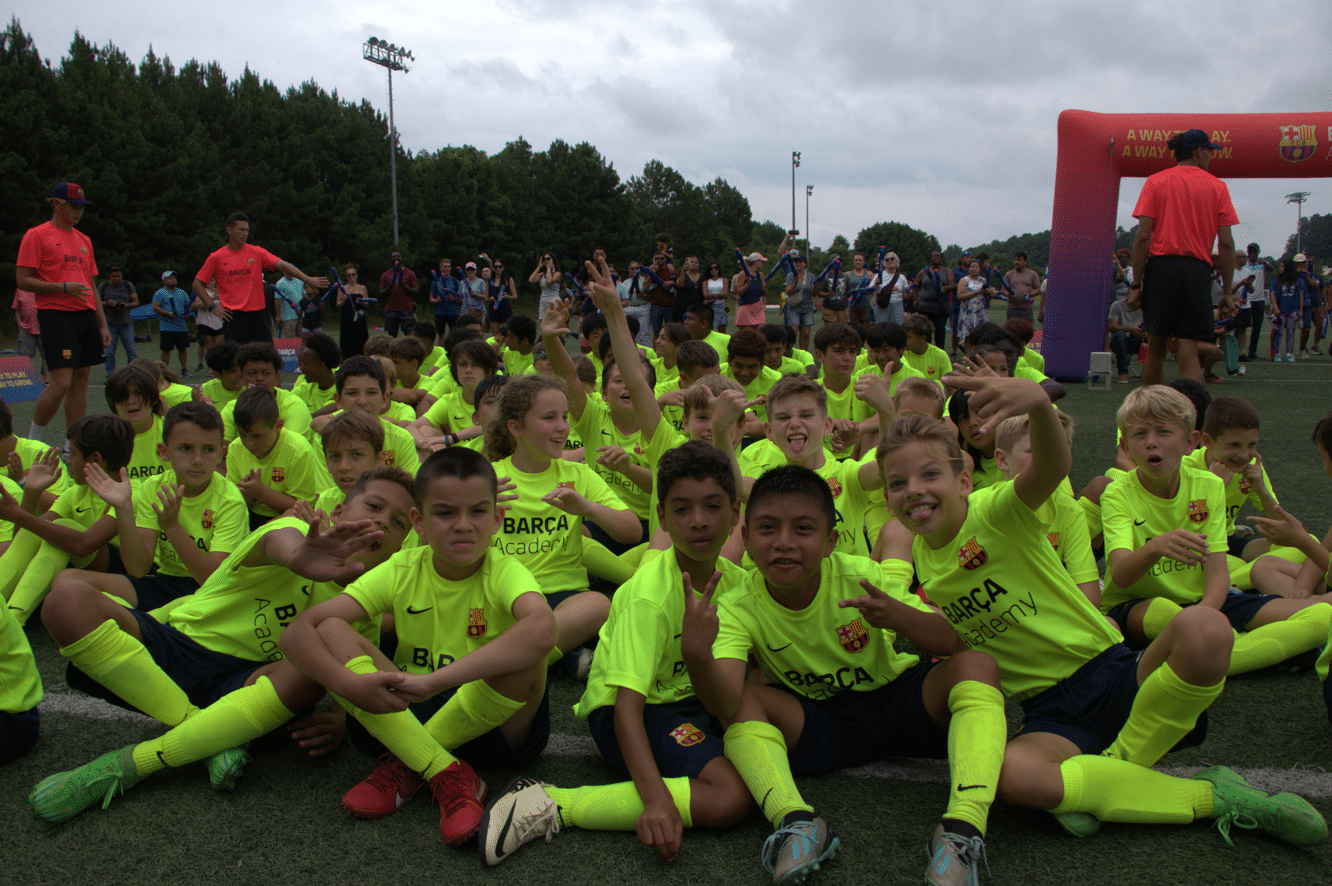
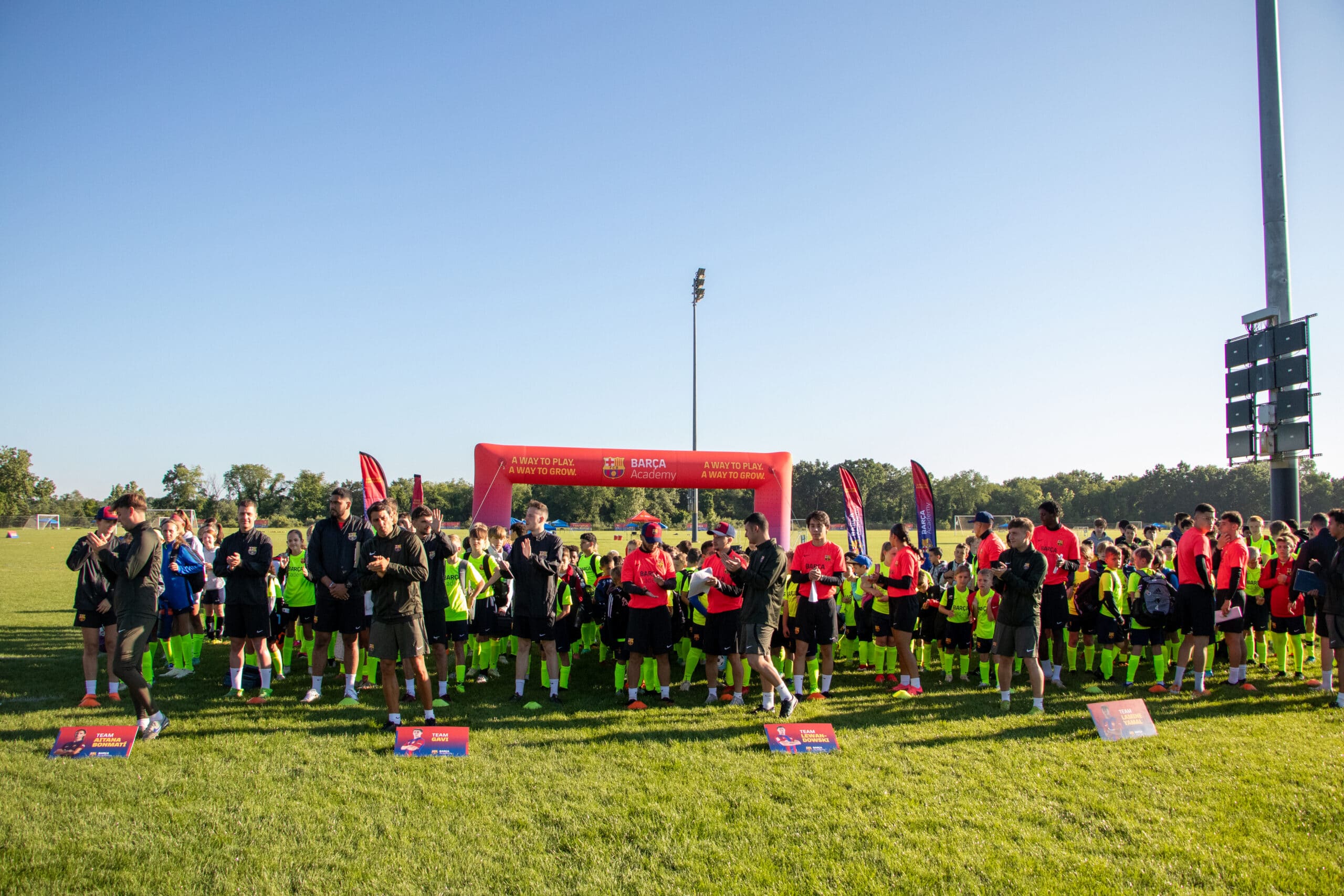
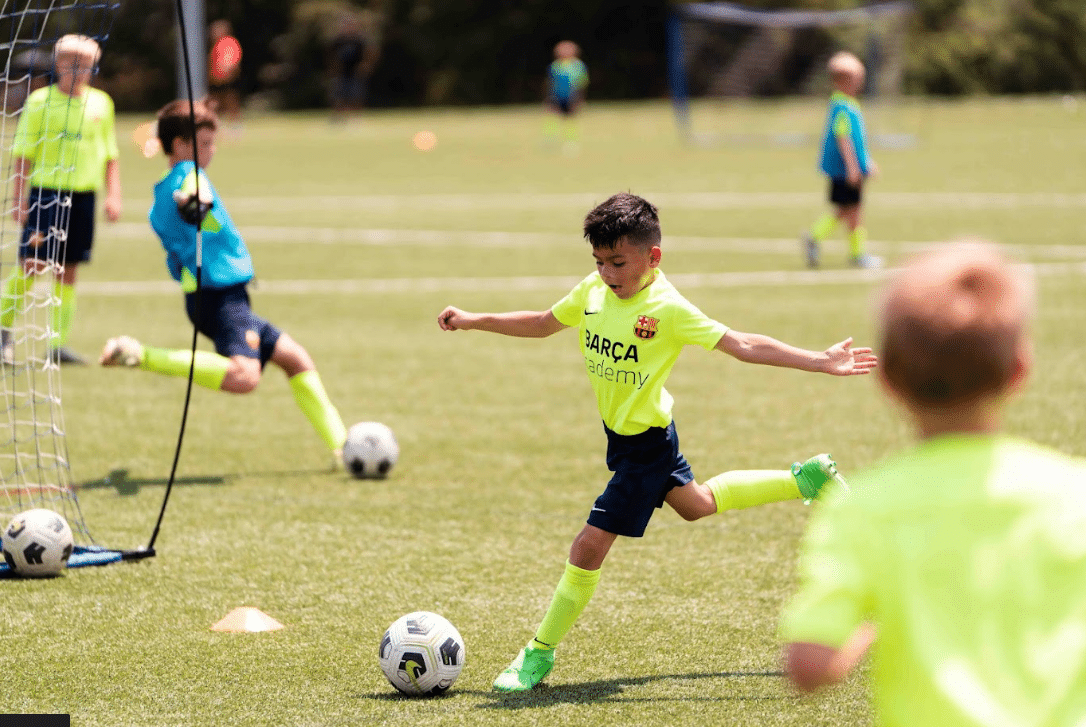
Barça Academy US translates these same drills into structured, coached programs across camps and year-round academies in the United States, using the club’s official curriculum rather than a generic youth soccer template. Families who want their child to go beyond backyard practice have a few structured paths:
- Camps — short-term, high-intensity sessions covering the same technical foundations described above, run by Barça-trained coaches.
- Academies — year-round programs that progress kids through the age-based curriculum, similar to how Premier Soccer Academy-style training operates at the club level in Barcelona.
- International Travel and the Barcelona Residential Clinic — for families wanting their child to train directly at the source of this methodology.
Parents deciding between home practice and enrollment can check how to join Barça Academy USA for the specific steps and requirements.
FAQ — Frequently Asked Questions
What age should a child start Barça soccer drills?
A child can start basic Barça soccer drills, like cone dribbling and simple rondos, as early as age 5-6. The exercises should scale in complexity, not intensity, at this stage.
How long should a youth soccer training session last?
A youth soccer training session should generally last 15-30 minutes for players under 10, and up to 45 minutes for players 11 and older, to match attention span and recovery needs.
What is a rondo in soccer?
A rondo is a possession drill where a small group of players pass the ball in a tight space while one or two defenders in the middle try to win it back. It builds first touch and quick decision-making.
Can Barça soccer drills be done without a team?
Barça soccer drills can be done solo or with one partner using cone dribbling, wall passes, and juggling. Group drills like rondos need at least three or four players.
How many times a week should a kid practice soccer drills?
A kid should practice soccer drills 3-4 times a week, mixing shorter solo sessions with at least one group or field session, while leaving time for rest.
What equipment is needed for Barça-style training?
Barça-style training needs only a properly sized ball, a set of cones, and a flat wall or rebounder. Bibs help once small-sided games are introduced.
Are small-sided games better than full 11v11 for kids?
Small-sided games like 3v3 or 4v4 are generally more effective for youth development because they increase each player’s touches on the ball and number of decisions per session.
How is Barça Academy US different from generic soccer camps?
Barça Academy US applies FC Barcelona’s own coaching methodology and curriculum rather than a generic camp format, structuring drills like the rondo and positional play into progressive, age-based programs.
Bringing It All Together
Consistency with a handful of well-chosen drills beats an ever-changing rotation of new exercises. A child who repeats the rondo, wall passes, and small-sided games week after week develops the same foundation FC Barcelona has built its academy system on for decades — one touch, one decision, and one rep at a time.