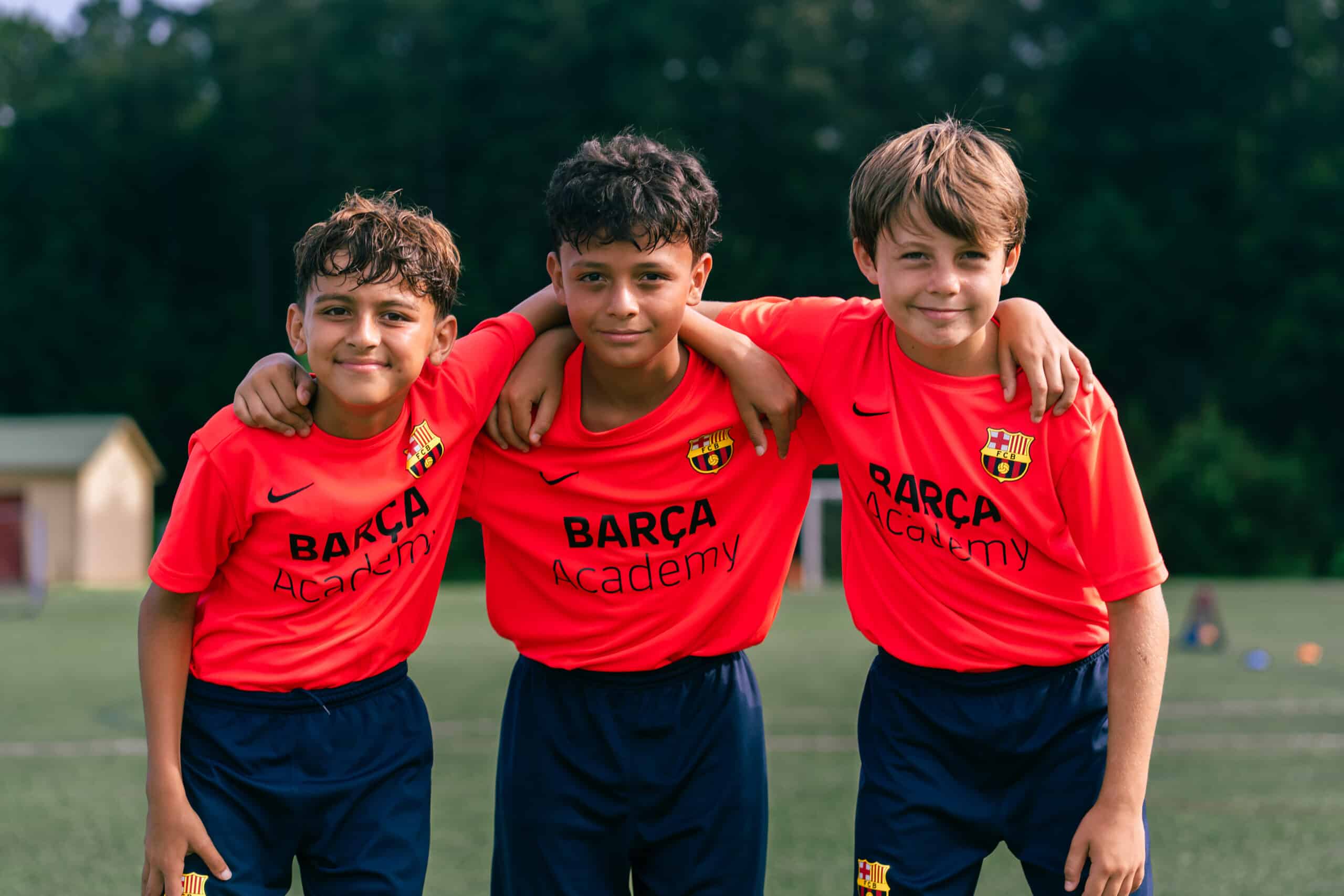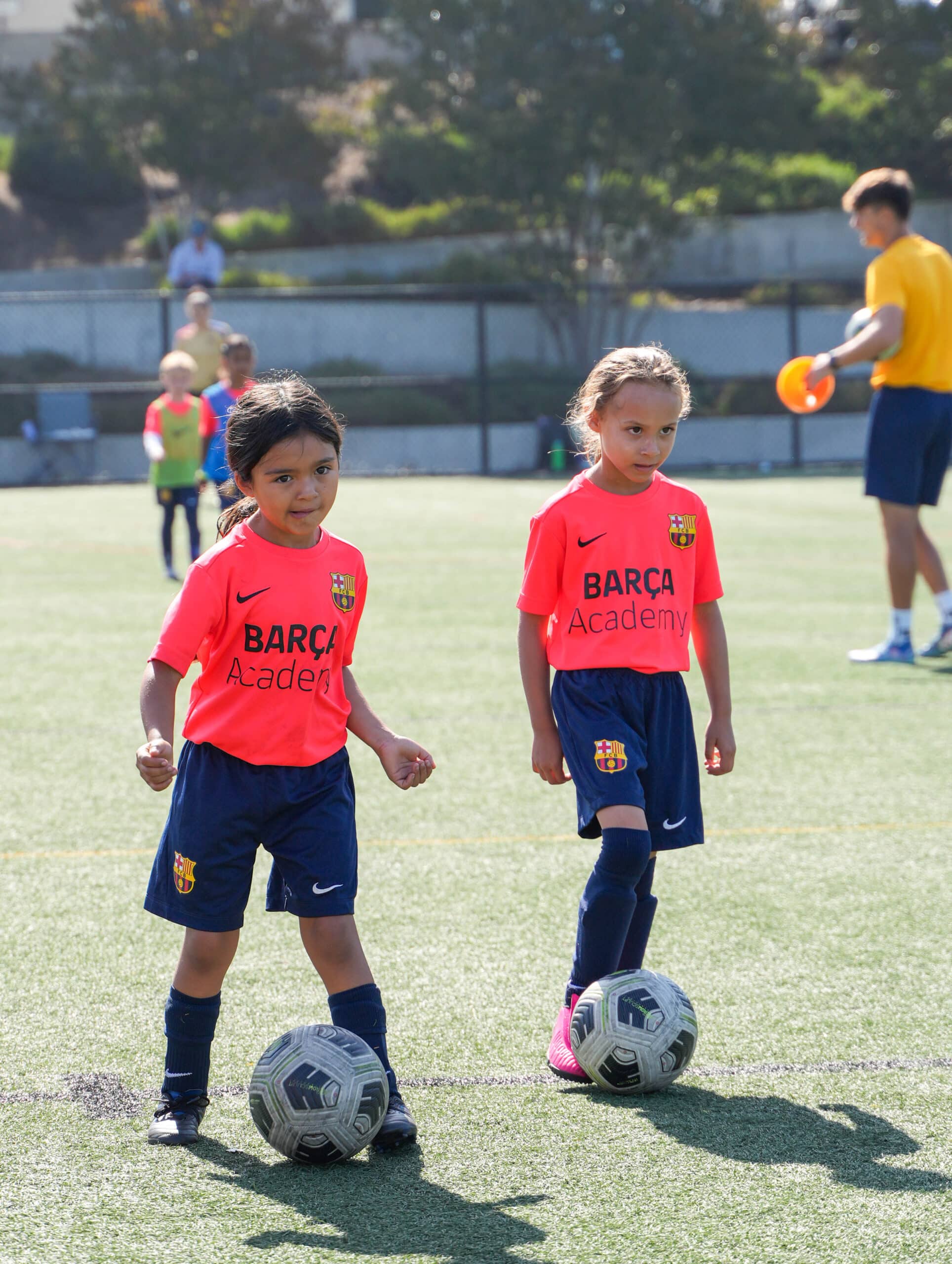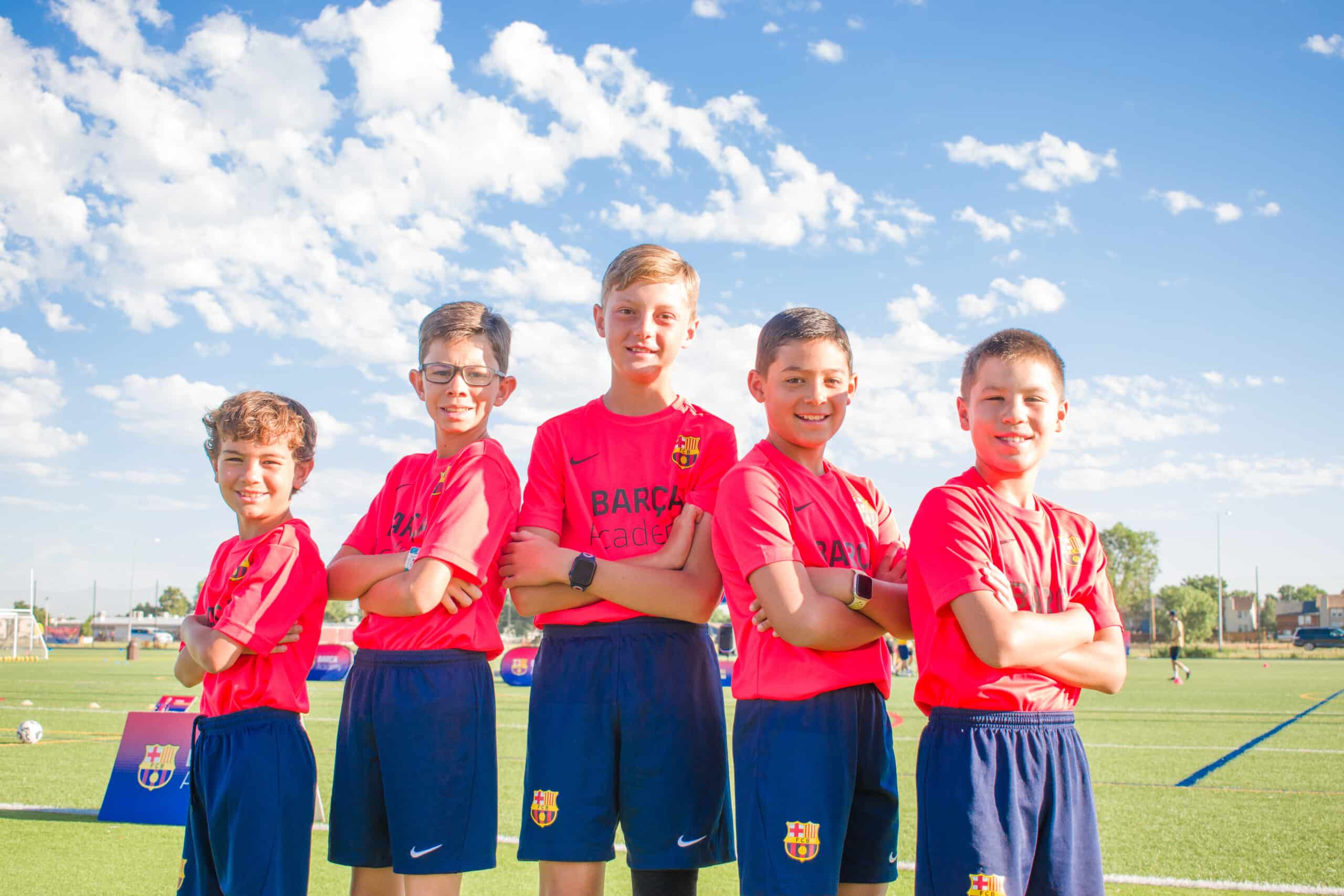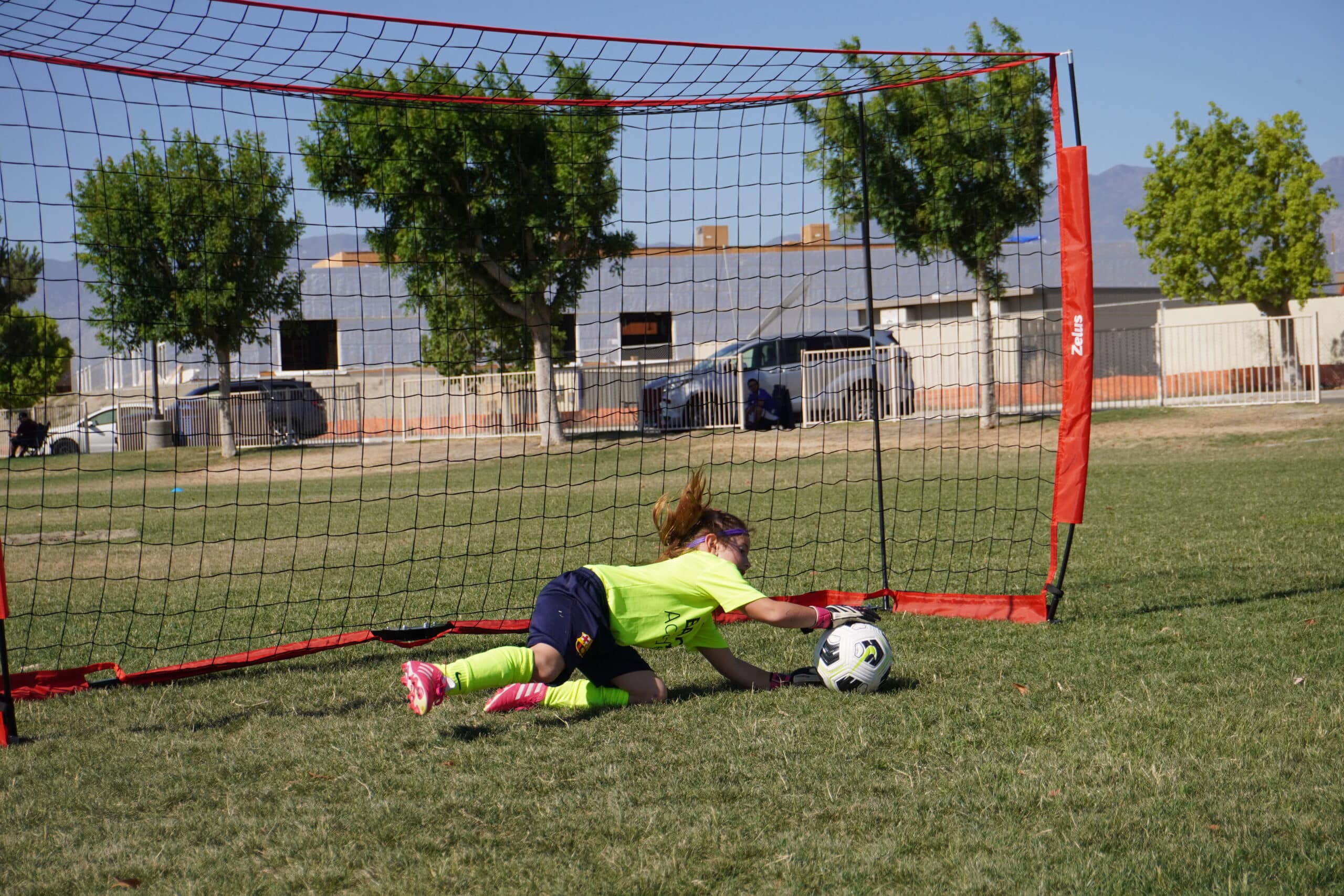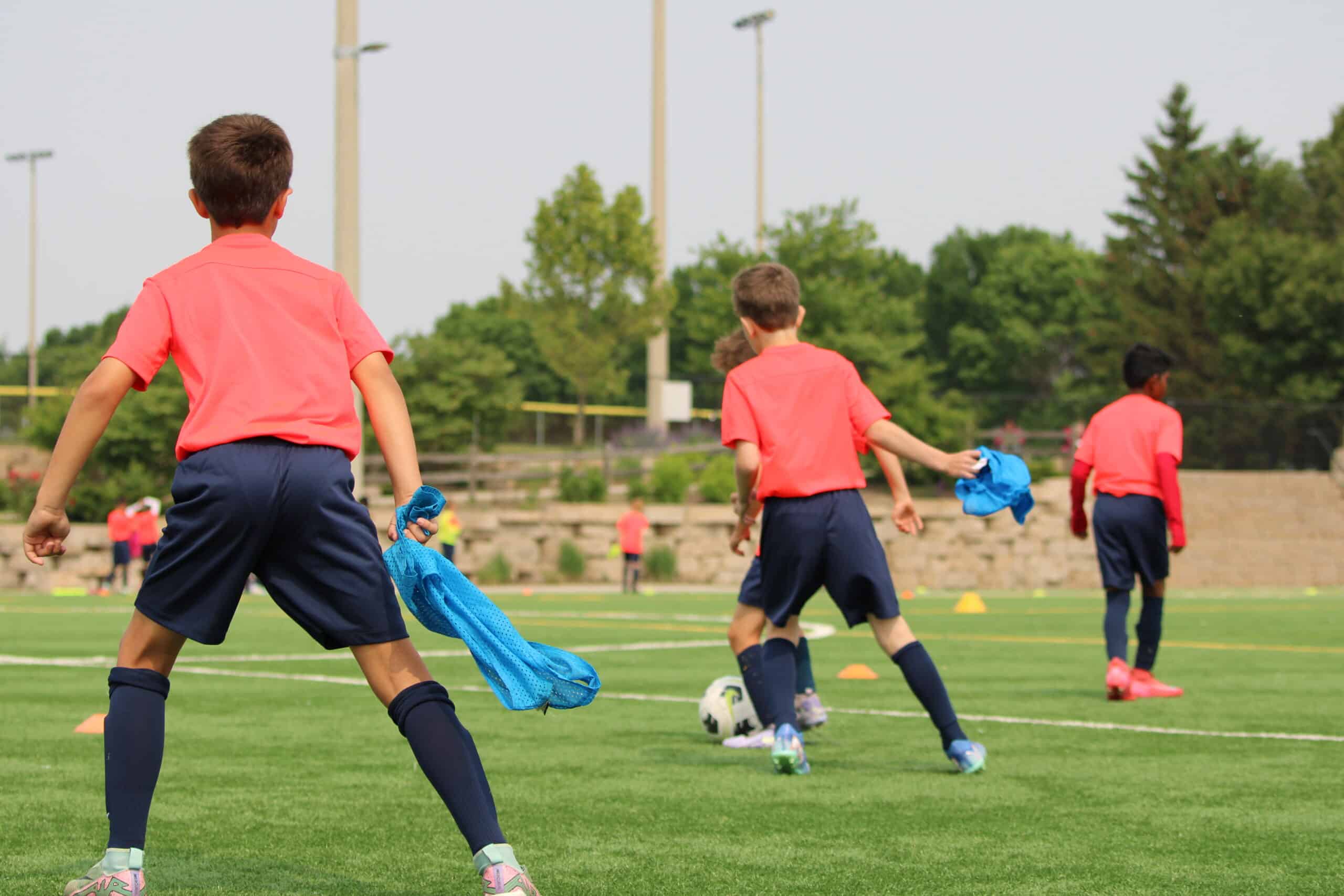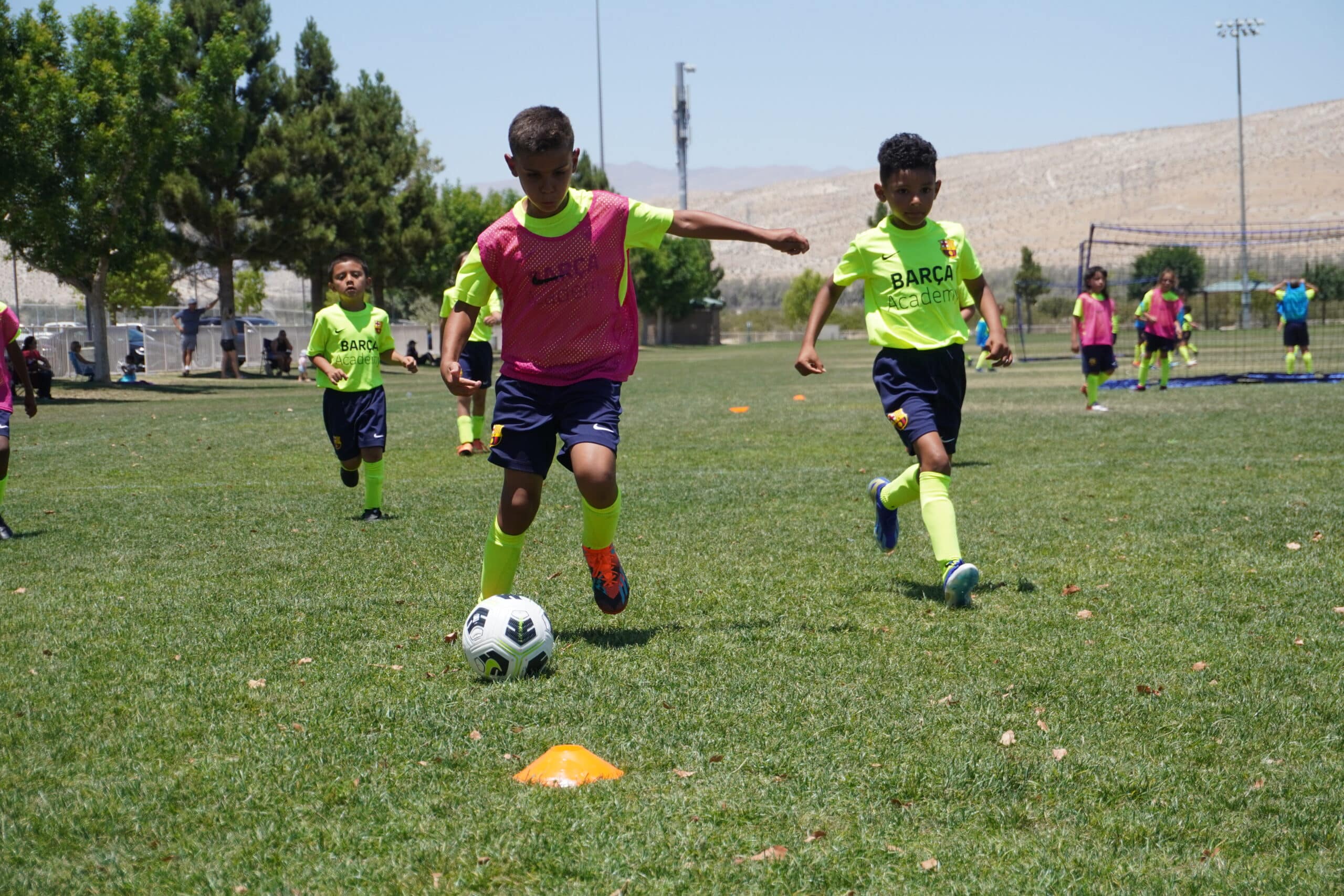


We know that great teams are built on great passing. From the youngest age groups to the elite level, accurate and intelligent passing is what keeps the game flowing, opens up space, and creates scoring opportunities. That is why we put a strong emphasis on soccer passing drills that develop technique, decision-making, and confidence on the ball.
Today, we will walk you through a series of carefully designed soccer passing drills inspired by the methodology of FC Barcelona. These drills can be adapted for different ages and levels, and they reflect how we train at our Barça Academy US summer camps. Our goal is to help players improve their accuracy, first touch, vision, and control so they can make better decisions on the field.
Warm-up passing drills to build rhythm
Effective training sessions start with a good warm-up that includes the ball as soon as possible. Here are two simple soccer passing drills we often use at the beginning of sessions to build rhythm and focus.
1. Two-player wall passes
Objective: improve basic passing technique, first touch, and communication.
Setup:
- Players work in pairs, 5–8 yards apart.
- One ball per pair.
How it works:
- Players pass the ball back and forth using the inside of the foot.
- After 10–15 passes, they switch to the weaker foot.
- Progressions can include one-touch passing, two touches with directional first touch, and increasing distance.
Coaching points:
- Plant foot next to the ball.
- Lock the ankle.
- Firm, accurate passes along the ground.
- Call out your teammate’s name before passing.
2. Triangle passing with movement
Objective: improve passing, receiving on the move, and angle of support.
Setup:
- Three cones arranged in a triangle (6–10 yards per side).
- One player at each cone, one ball.
How it works:
- Player A passes to Player B and then moves to take B’s place.
- Player B receives, opens up, and passes to Player C, then moves.
- Player C does the same, keeping the triangle rotation going.
Progressions:
- Limit to two touches: one to control, one to pass.
- Add a second ball to increase tempo.
- Change direction of rotation.
Coaching points:
- First touch into space, away from the cone.
- Body open to see the next pass.
- Timing of movement after each pass.
Intermediate soccer passing drills for accuracy and control
Once basic technique is established, we increase the complexity by adding movement, angles, and decision-making. These soccer passing drills are ideal for team training or more advanced individual work with partners.
3. Passing gates for precision
Objective: develop passing accuracy and control of power.
Setup:
- Place multiple small gates (two cones 1–2 yards apart) across the field.
- Players work in pairs with one ball.
How it works:
- Each pair stands 5–10 yards from a gate.
- They pass the ball through the gate to each other.
- After 10 successful passes, move to another gate or increase distance.
Progressions:
- Weaker foot only.
- One-touch passes.
- Timed challenges: how many accurate passes in 60 seconds.
Coaching points:
- Focus on accuracy before power.
- Adjust distance to keep success rate high but challenging.
- Encourage positive communication.
According to coaching guidelines from organisations such as the United Soccer Coaches, repeated, focused technical work like this helps young players build muscle memory and confidence with the ball.
4. One-touch rondo (4v1 or 5v2)
Objective: improve first touch, quick passing, awareness, and pressure decision-making.
Setup:
- Square or circle grid, 8–12 yards in size.
- Four or five attackers on the outside, one or two defenders in the middle.
- One ball.
How it works:
- Outside players keep possession, passing around the defenders.
- Defenders try to win the ball. If they do, they switch with the player who lost it.
- Start with two touches, then progress to one-touch.
Coaching points:
- Play with your head up.
- Use the correct surface of the foot.
- Pass to the correct foot of your teammate (away from pressure).
- Encourage constant movement and support angles.
Rondos are a core part of the Barça methodology because they combine technical work with tactical intelligence. They are one of the most powerful soccer passing drills for building the habits we want to see in real matches.
5. Pass and overlap combination
Objective: link passing with attacking movement and timing.
Setup:
- Line of three or four players in a channel (wide area of the field).
- One ball at the feet of the first player.
How it works:
- Player A passes to Player B, then makes an overlapping run around B.
- Player B controls, waits for the overlap, then passes into A’s path.
- Player A continues with the ball, then the next players repeat the pattern.
Progressions:
- Add a passive defender to increase challenge.
- Finish with a cross and shot on goal.
Coaching points:
- Quality and timing of the first pass.
- First touch of the receiving player.
- Weight and direction of the return pass into the run.
This drill links technical passing skills with attacking patterns that often appear in wide areas during matches.
Advanced soccer passing drills for game intelligence
As players grow and improve, we increase the tactical complexity of our soccer passing drills. At Barça Academy US summer camps, older groups spend more time on drills that simulate real game patterns: switching play, breaking lines, and playing out from the back.
6. Positional play: 4v2+2 neutral (keep-ball game)
Objective: develop possession play, use of neutral players, and playing between lines.
Setup:
- Rectangle grid divided into two halves.
- Two teams of four, plus two neutral players who always play with the team in possession.
- One ball.
How it works:
- Team A keeps the ball using the neutral players, aiming to complete a set number of passes.
- Team B defends and tries to win the ball.
- When Team B wins it, roles switch.
Progressions:
- Limit touches for neutral players.
- Require a pass into the opposite half after a certain number of passes.
- Introduce directional targets (small goals or end zones).
Coaching points:
- Find the free player as quickly as possible.
- Play through, around, or over the defensive block.
- Encourage communication and constant support angles.
Exercises like this help players understand how passing can break pressure and create numerical superiority, which is central to the Barça identity.
7. Playing out from the back pattern
Objective: practice building from the goalkeeper through defenders and midfielders.
Setup:
- Half-field, with goalkeeper, back line, and midfield players in realistic positions.
- No direct opposition at first, then add passive pressure.
How it works:
- Goalkeeper starts with the ball and plays to a centre-back or full-back.
- The team then follows a pre-designed passing pattern to progress the ball into midfield or wide areas.
- After each sequence, reset and repeat, then vary the pattern.
Progressions:
- Add one or two pressing attackers.
- Finish with an attack on goal once the ball reaches the final third.
Coaching points:
- Quality of first touch under light pressure.
- Body orientation to play forward when possible.
- Communication between goalkeeper and defenders.
How to structure a training session with passing as the focus
To get the most out of these soccer passing drills, it is important to organize them into a logical, progressive session. At Barça Academy US, a typical passing-focused session might look like this:
- Dynamic warm-up with the ball (10–15 minutes): Light movement, mobility, and basic partner passing.
- Technical drills in small groups (15–20 minutes): Gates passing, triangle passing, or two-player combinations.
- Positional games and rondos (20–25 minutes): 4v1, 5v2, or small positional games.
- Game-related exercises (20–25 minutes): Playing out from the back, attacking patterns, or directional possession games.
- Small-sided game (15–20 minutes): Free play with specific challenges, like a minimum number of passes before scoring.
This structure ensures that players repeat key technical actions many times, then apply them in realistic game contexts.
Tips for players to improve passing outside of team training
At Barça Academy US, we encourage our players to take responsibility for their own development. Here are some simple ways to keep improving passing even when you are not at a formal session:
- Use a wall: a solid wall can be one of the best training partners. Aim for targets, vary distance, and practice with both feet.
- Set personal goals: for example, complete 100 accurate passes with each foot every day.
- Watch and learn: study professional matches and focus on how players move before they receive and how often they pass with one touch.
- Stay consistent: short, frequent sessions are often better than long sessions once a week.
Over time, these habits combine with structured soccer passing drills at training to produce noticeable improvement in accuracy and control.
Turn training into game-changing performance
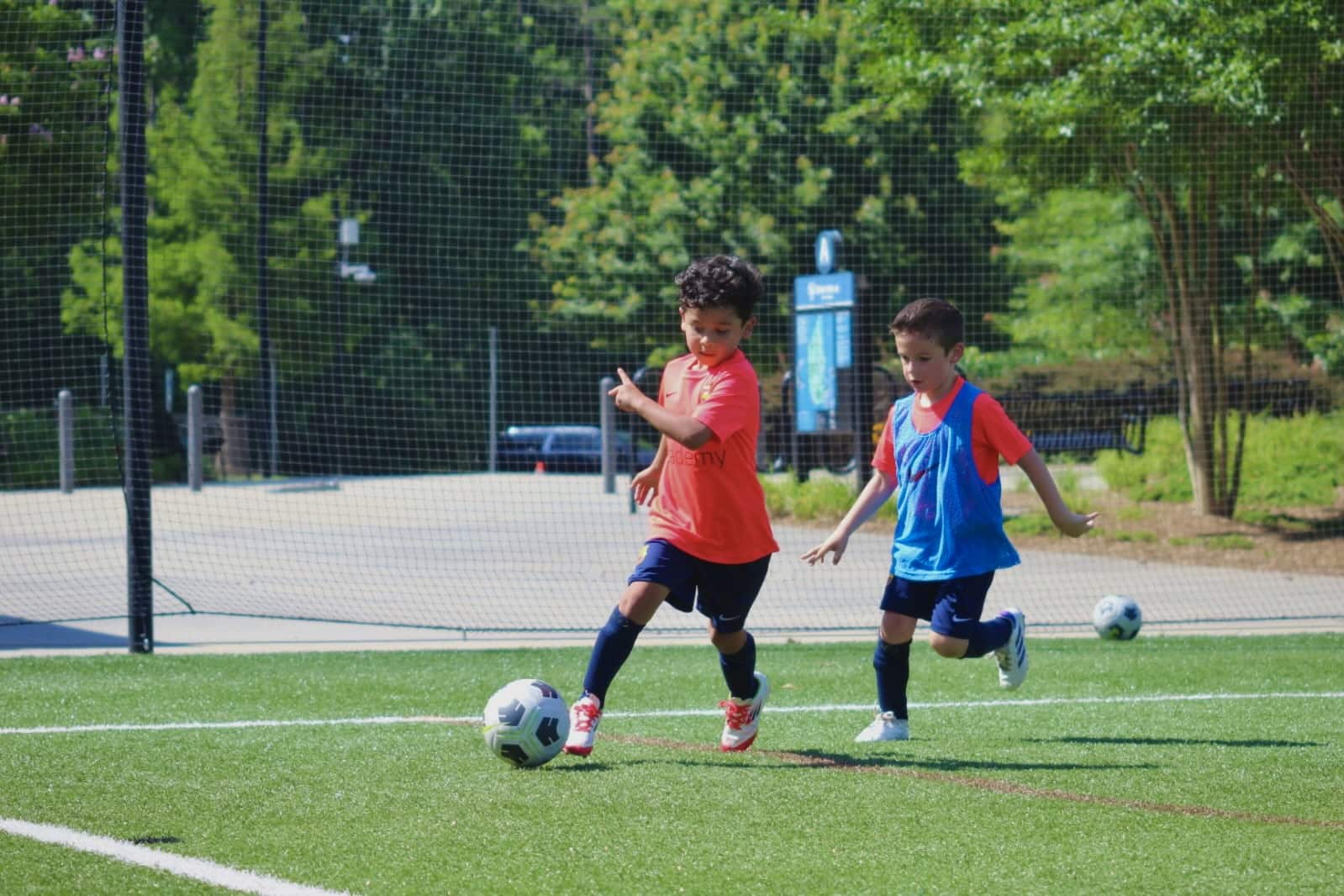
Strong, accurate passing is not just a technical skill; it is the engine of a team’s style and identity. Through well-designed soccer passing drills, players can develop the technique, vision, and confidence needed to keep the ball, break lines, and control the rhythm of the game.
At Barça Academy US, we live this every day on the training pitch. Our methodology unites individual technical work with collective understanding, helping players see the game the way top professionals do. While every player’s journey is unique, and results depend on many factors, our mission is to provide a high-quality environment that supports growth and passion for the game.
If you want your child to experience the Barça way of training, from foundational passing to advanced positional play, we invite you to explore our upcoming programs.
Join us at Barça Academy US this summer to train using the same principles that have shaped some of the world’s most creative and intelligent players.